What to bring on a Puerto Vallarta whale watching boat
A whale trip in Banderas Bay means three or four hours in strong sun with spray coming over the side. The right small bag makes the difference between a comfortable morning and a burnt, damp one. Our list has twelve items, and most of them fit in one pocket.
Three or four hours in sun and spray
These trips last from 3 hours on the faster boats to 4.5 hours on the all-inclusive cruise. Much of that time you stand on an open deck in tropical sun, scanning the water for a blow.
The sun is the main thing to plan for. Spray and wind come next, and once the boat is moving there is little room to rummage through a big bag. Pack light and keep the essentials where you can reach them.
A soft day bag works better than a hard case or a suitcase-style backpack. You will sit with it on your lap or tuck it under a bench, and anything left loose on deck tends to slide when the boat turns.
The 12-item list
- Reef-safe sunscreen, put on before you leave your room and again on board
- A hat with a strap, since a loose cap blows off once the boat picks up speed
- Sunglasses on a cord, polarized if you have them, to cut the glare off the water
- Light long sleeves or a windbreaker for the spray and the breeze on the way back
- Cash in pesos for tour 1's MX$80 boarding fee and for tips
- Small US dollars or a card for the $2 port fee on the Los Veranos trip
- Motion-sickness tablets, taken before boarding rather than once you feel sick
- A refillable water bottle, even when drinks are included
- A camera with a zoom, or a phone on a wrist strap
- A small dry bag for the phone, cash and spare battery
- Binoculars for blows and tails far across the bay
- Photo ID, or a copy of it, in case the dock asks for one
Sun and heat come first
Winter highs in Puerto Vallarta sit around 27–29 °C (81–84 °F), and the light bounces off the water from every side. Shade on deck is limited on most boats, and people burn faster than they expect while watching the sea.
Choose a reef-safe sunscreen, since the bay is a living sea, and bring the bottle rather than relying on one coat at breakfast. A hat with a chin strap stays on when a fast boat runs between sightings, and sunglasses on a cord survive a lean over the rail.
Clothes for a wet, windy deck
The morning may feel warm on the dock, but the breeze on open water feels cooler, especially on the ride home. A thin long-sleeved shirt protects you from the sun and the wind together, and a light windbreaker keeps off the spray.
The Los Veranos list asks for comfortable clothes, and that is good advice for every boat. Wear shoes with grip that can get wet, since decks turn slippery. Our page on which boat to choose explains which boats throw the most spray.
Leave the swimsuit at home unless your trip says otherwise. None of the five tours we compare lists swimming, so plan to stay dry and on board.
Pesos for fees and tips
Two of the five tours ask for a little money on the day. The Ecotours Vallarta research trip from ~$120 charges an MX$80 boarding fee, so bring pesos. Los Veranos at ~$99 adds a $2 port fee, payable in cash or by card.
Three of the five listings leave crew tips out of the price, so carry some small notes if you plan to tip. Our full price comparison lists every extra the listings name.
Change some money into smaller notes before the trip, since a crew may struggle to break a large one at sea. Keep the cash in the dry bag with your phone, so a wave over the side does not soak it.
What to eat before you sail
Meals vary a lot. Tour 1 offers coffee or tea, water, sodas and granola bars, so a light breakfast before you leave helps. Tour 2 serves breakfast and lunch, while tour 5 includes drinks and food in the price.
Bring your own bottle anyway, since sun and wind dry you out fast. Take motion-sickness tablets before boarding and go easy on a heavy breakfast. Our seasickness guide has more ways to stay steady on a swell.
Food and drink already on board
Live & Travel Tours includes drinks and food on a 4.5-hour whale and dolphin trip with a marine biologist and a hydrophone. It is the cheapest tour here, though it also has the lowest review scores.
Kit for the photos
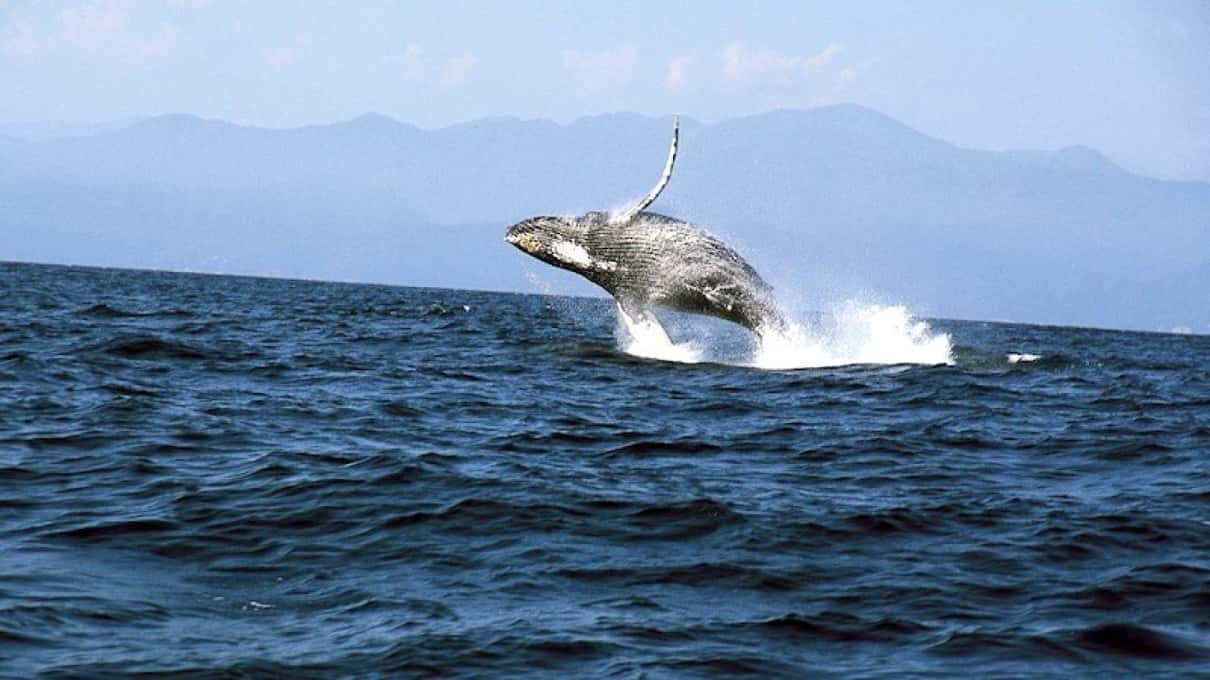
Whales often surface at a distance, and boats must keep their space under Mexican rules. A camera with a zoom gets you closer than a phone does, though a phone on a wrist strap is fine for the near moments.
Binoculars help you pick out blows and tails far across the bay. A small dry bag keeps the phone and cash safe from spray. Drones are not allowed on the Los Veranos trip, so leave yours at the hotel and check the listing for other boats.
Set your camera to a fast shutter speed before the first whale appears, because a breach is over in a second or two. Shooting in bursts helps, and so does keeping one hand on the rail when the boat rolls.
What you can leave behind
Heavy towels, a laptop and anything you would hate to lose overboard can stay in your room. Most trips start from a dock where there are no lockers mentioned in the listings, so assume whatever you bring will travel on the boat with you.
For tips on photographing whales from a moving deck, read what a biologist on board adds, which covers tail photos and the research side. If you travel with children, see our page on whale watching with kids for their extra kit.